A small living room has to do several jobs, often within sight of the front door, dining table, or kitchen. The most useful changes start with those jobs: a comfortable place to sit, somewhere to put a drink, storage for everyday things, and an easy route through the room.
These small living room ideas suit an apartment as well as a compact house. Use them as a sequence, starting with the arrangement you already have. You may find that moving a table helps more than adding another piece of furniture.
Start with the route through the room
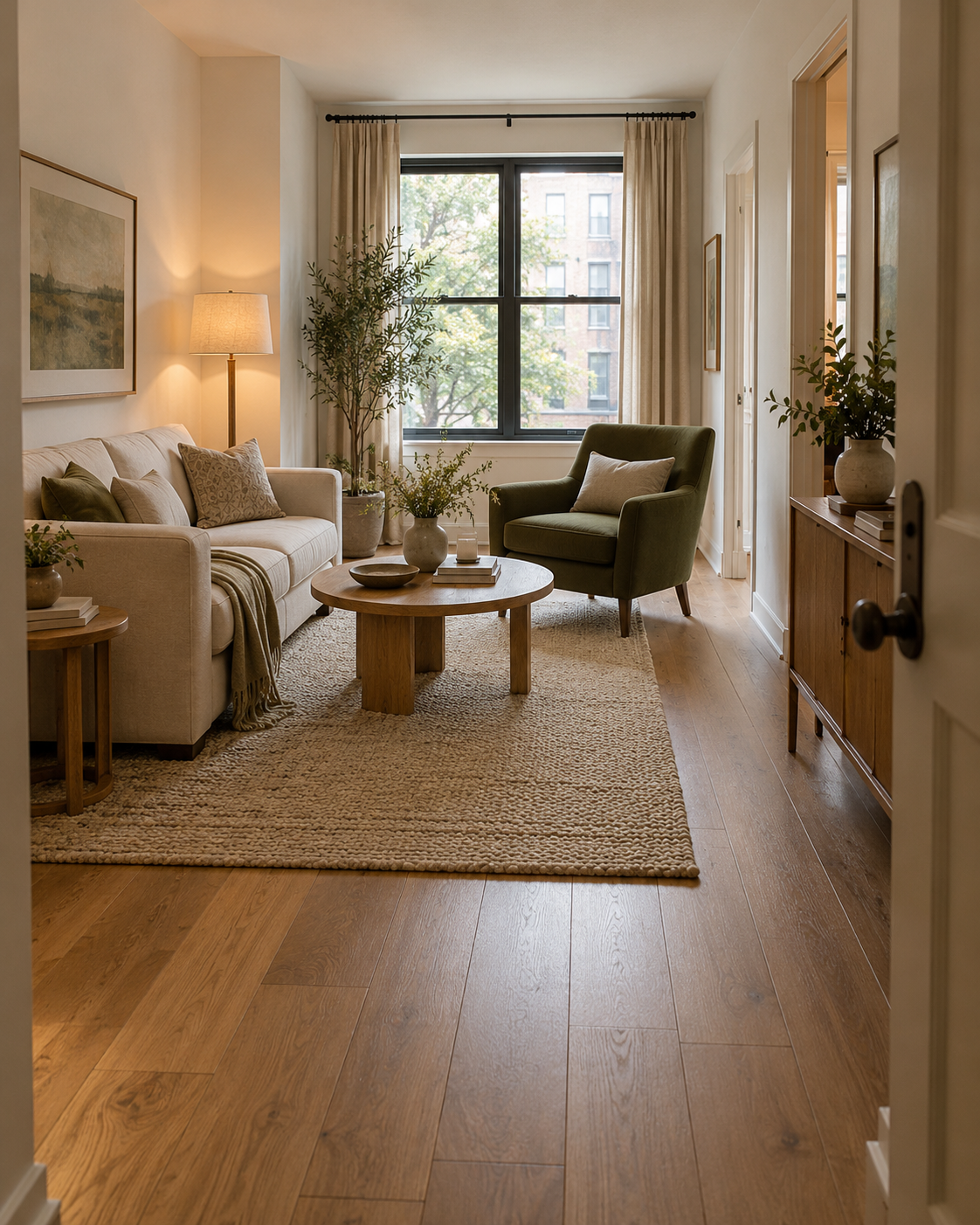
Walk from the entrance to the sofa, then to the window and any storage you use. Notice where you turn sideways, move a basket, or step around a table. Those are the first places to simplify.
Sketch the furniture from above and mark every door swing, drawer, radiator, and outlet you need to reach. If you are considering a new piece, mark its footprint on the floor before buying it. Check the room with doors and drawers open, as well as closed. A layout should work during an ordinary evening, not just when everything is neatly tucked away.
In a room that doubles as a route to another space, place the main seating group to one side of that route where possible. Avoid making the coffee table the obstacle everyone has to walk around.
Give the seating one clear center
A sofa, armchair, and table can feel like a collection of unrelated objects until they share an anchor. Try turning the chair toward the sofa and placing the table within comfortable reach of the seats you actually use. The center might be a table, an ottoman with a tray, or simply the open space between two seats.
A rug can help define that group, but choose it after checking the furniture arrangement. Look at how its edges meet the sofa and chair legs. A small rug floating between every piece may emphasize the gaps; a larger one can connect them if the room and budget allow. Neither approach needs to follow a formula at the expense of a door that will no longer open.
Choose the table for the way you move
A round table removes sharp corners from a busy route, but its diameter still takes up floor space. A narrow rectangular table can sometimes fit a slim room better. Compare actual footprints rather than assuming one shape is always best.
If you rarely use a central table, try a side table beside the seat you use most. Nesting tables offer an extra surface when someone visits, then tuck away afterward. With an upholstered ottoman, use a stable tray for drinks and check that it leaves enough usable seating or footrest space.
Use storage where clutter actually lands
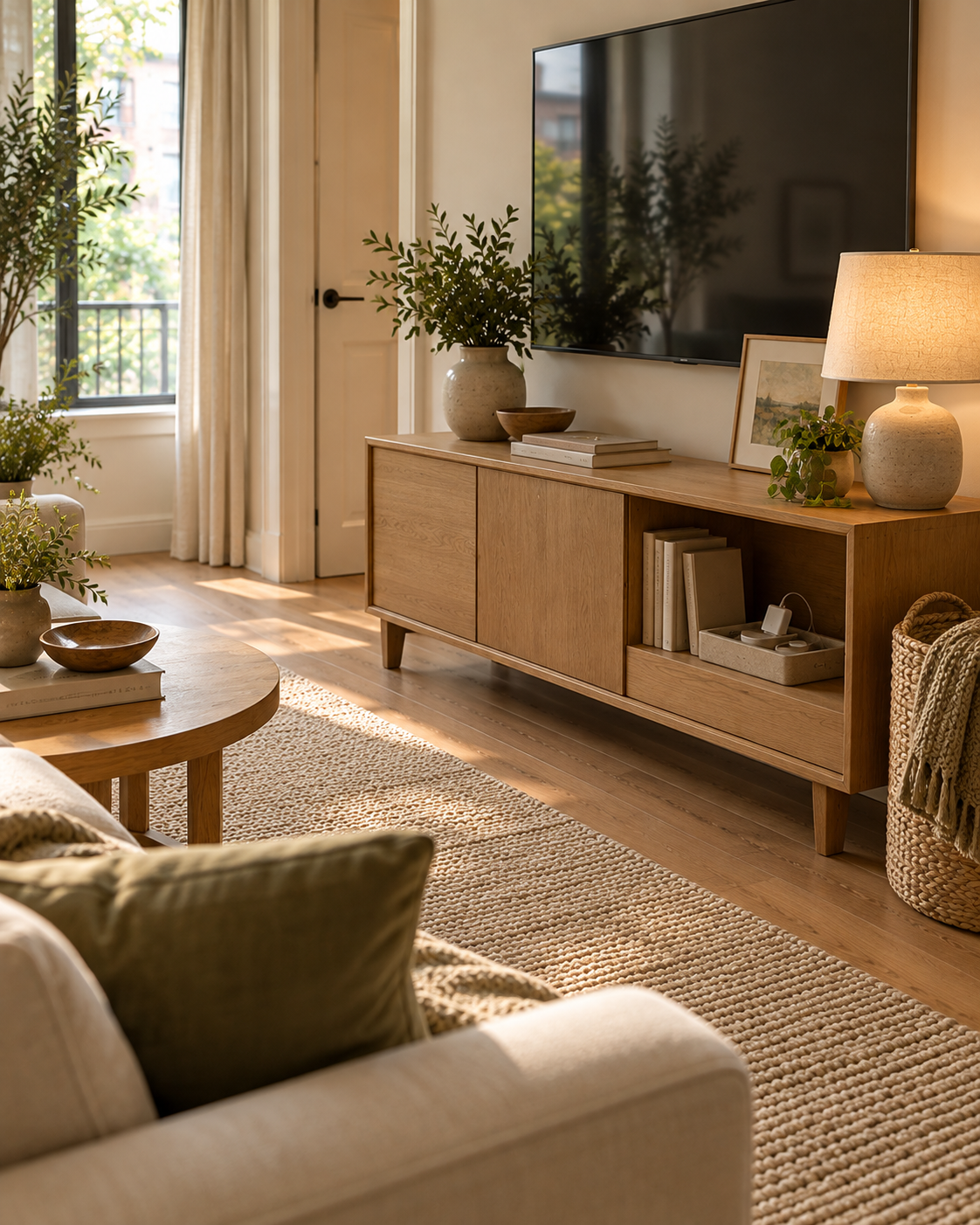
Look at the things that stay out: remote controls, chargers, books, blankets, or bags. Give each group a convenient home near where it is used. Closed storage is useful for visually busy items; an open shelf works well for a few things you reach for often.
One low cabinet can hold more everyday clutter than several small baskets scattered around the room. Measure its usable interior, not just its outside dimensions. A shallow cabinet is only helpful if your items fit inside it.
Keep a basket beside the sofa for the blankets you use regularly. If the basket blocks a drawer or the route to the window, move it rather than treating that awkward position as part of the decor.
Repeat a few colors and vary the texture
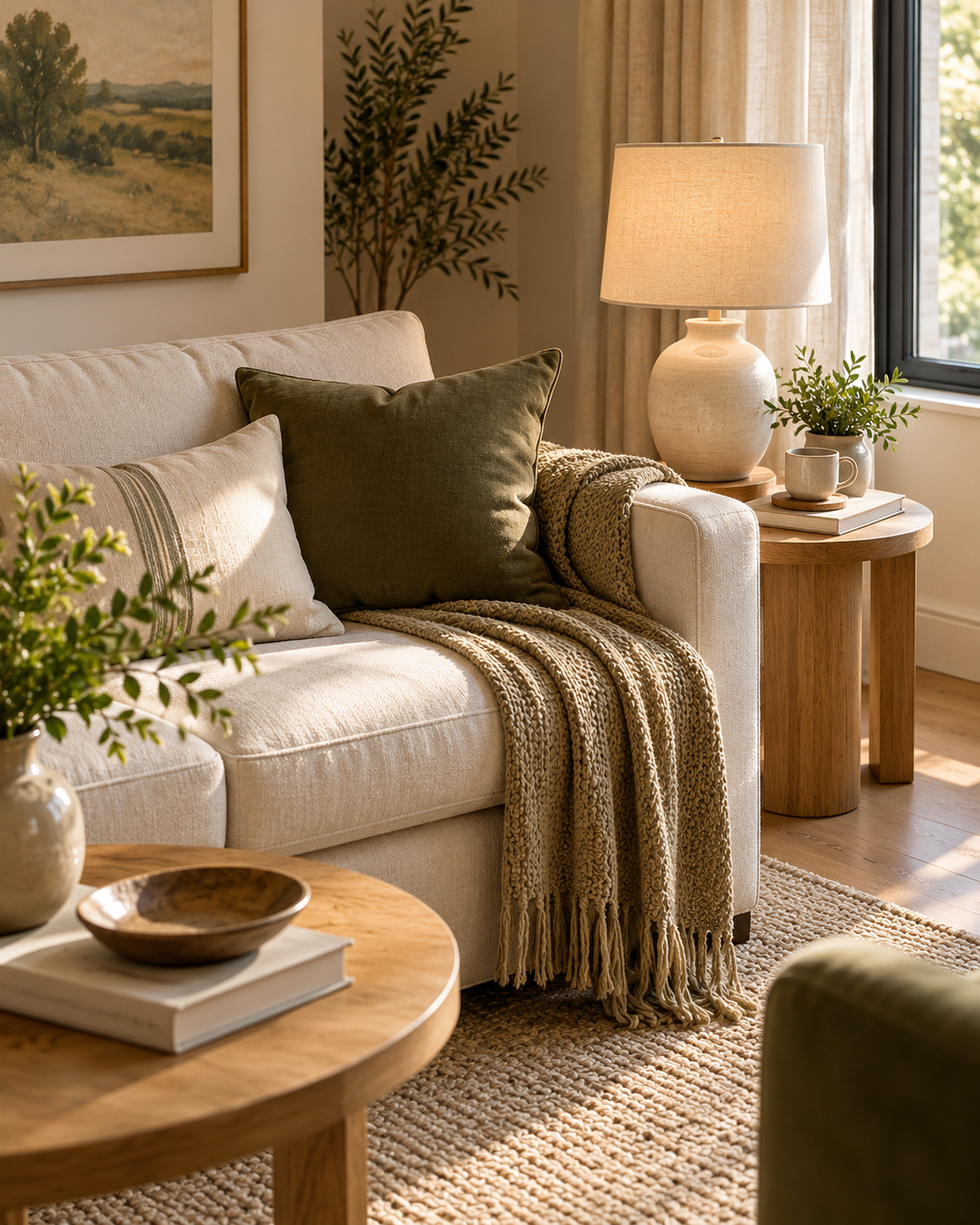
A limited palette gives different pieces something in common. Try a warm neutral base, one wood tone that appears more than once, and a deeper accent in a cushion, chair, or print. Ivory, oak, and olive are one possibility; warm white, walnut, and rust are another.
Texture keeps a quiet palette interesting. A smooth cabinet, a woven throw, and a linen cushion do different visual jobs even when their colors are similar. Begin with the surfaces already in the room before buying more accessories. A patterned rug or a dark sofa may already provide the contrast the space needs.
Let curtains and lighting support the layout
Check where curtains fall when they are open. Fabric that covers much of the glass can make an already dim corner less useful. Work with the window and the available wall space, keeping heaters, doors, and furniture access in mind. Follow the fitting and fixture instructions for your particular setup.
Place a reading lamp near the seat used for reading, and add a softer source of light near another part of the room if needed. A floor lamp needs a real place for its base; a small table lamp may work better on an existing cabinet. Keep cords out of the main walking route and use fixtures as directed by their manufacturers.
Leave one surface with room to breathe
A small room does not need every shelf, sill, and table to carry a display. Choose one place for a few objects you like, then keep another surface useful. On a coffee table, a shallow tray can gather a remote and a book while leaving space for a drink.
Artwork can do more than several small decorations. Try an arrangement with paper templates first so you can judge its scale from the sofa and the doorway. Keep the composition related to the furniture beneath it rather than filling the wall simply because it is empty.
A practical reset for this weekend
Clear the walking route, move the most awkward table, and gather everyday clutter into one useful storage spot. Live with that arrangement for a few days. Then decide whether the room needs a different lamp, another seat, or fewer objects.
A cozy small living room is one you can use easily. Keep the changes that make sitting, reading, tidying, and having someone over feel simpler.