A Thanksgiving table needs room for plates, glasses, serving dishes, and the people sitting around it. Start there, then add a few seasonal details that make the meal feel considered. A low centerpiece, simple linens, and a repeated color can be enough.
These Thanksgiving table decor ideas work for a small gathering as well as a longer table. They are styling options rather than a shopping list. Choose the pieces that fit your meal, and use what you already have before adding anything new.
Set the practical places first
Lay out a complete place setting for each guest, including the glasses you expect to use. Pull out the chairs and sit down to see whether the arrangement feels comfortable. This is especially useful with a narrow table or a bench, where a large centerpiece may take more room than expected.
Next, put the empty serving dishes on the table. If everything will not fit comfortably, plan to serve some dishes from a nearby counter or sideboard. That decision gives you a realistic decorating area instead of a centerpiece you have to dismantle when dinner begins.
Choose one quiet foundation
A tablecloth, runner, or set of placemats can establish the mood. You do not need all three. A runner leaves more of a wooden table visible; a tablecloth creates a continuous backdrop when chairs, dishes, and serving pieces are varied.
Try the fabric with your plates before deciding on an accent color. Warm ivory and natural linen work with many everyday dishes. A patterned cloth can also work, but keep the rest of the arrangement simpler so the table does not become visually crowded.
Build a low centerpiece
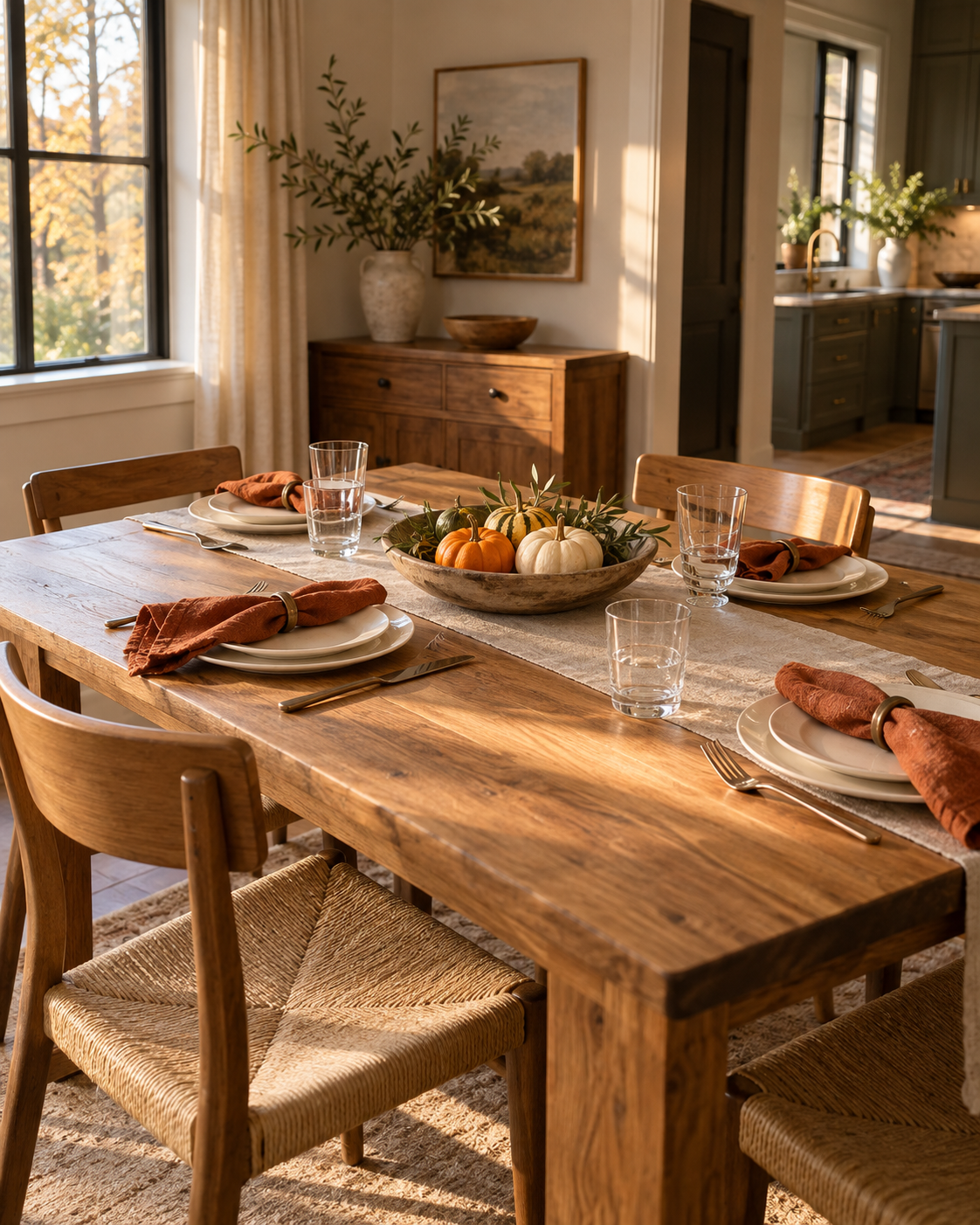
Use a shallow bowl, a low vase, or a small cluster of decorative pumpkins as the starting point. Check the view from a seated position. Guests should be able to see one another without leaning around the arrangement.
For a short table, one modest centerpiece often works better than a series of objects running its full length. On a longer table, repeat a small grouping with gaps for serving dishes. Leave the edges and the areas around place settings useful.
Place the arrangement on a tray if it may need to move. A centerpiece that lifts away easily is helpful when the table changes from serving dinner to holding a board game or dessert.
Repeat a color in two or three places
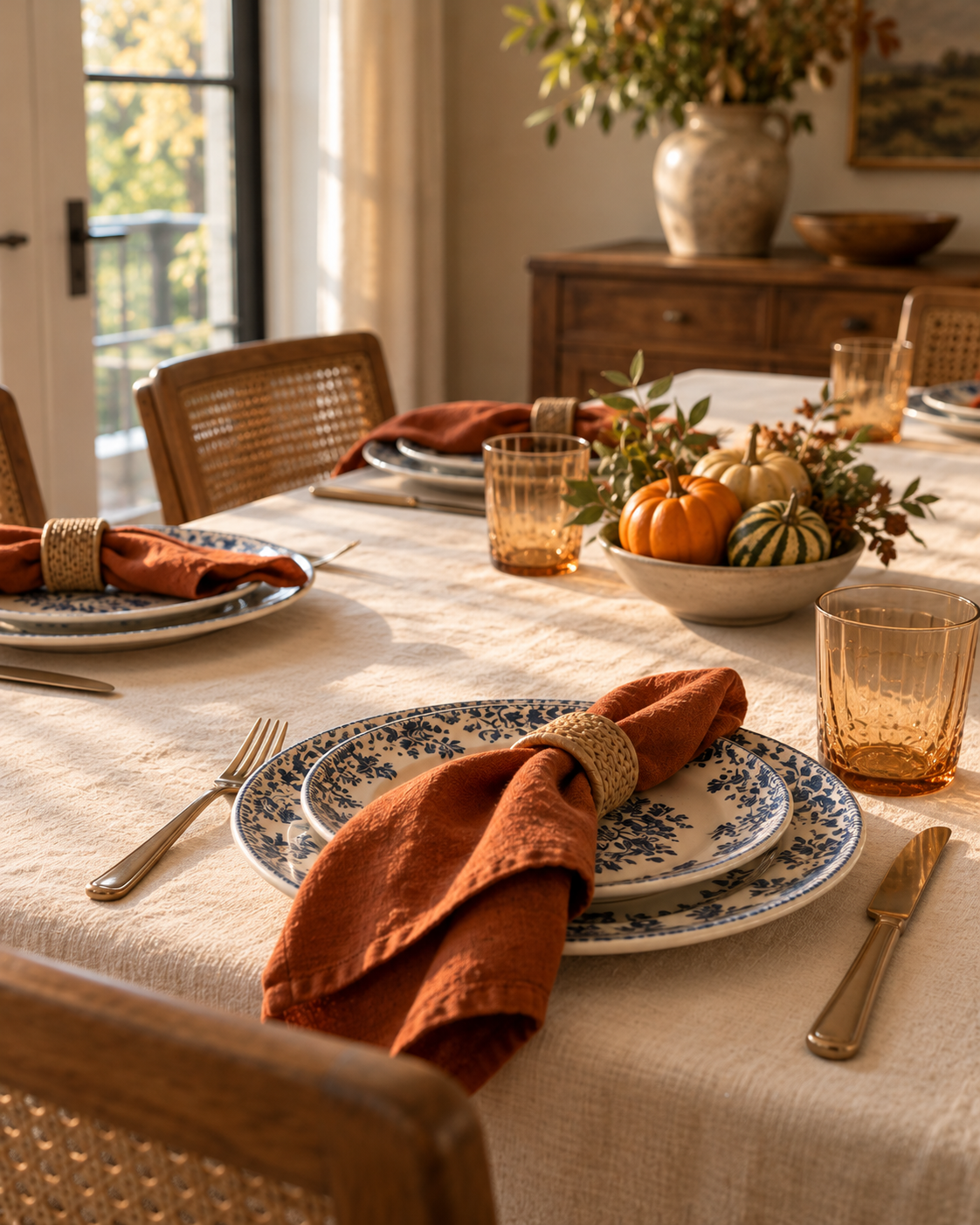
Choose an accent from something you already own: rust napkins, amber glasses, olive dishes, or blue-and-white plates. Repeat it in a second part of the setting so it feels deliberate. That might mean a small ribbon on place cards or a similar tone in the centerpiece.
You do not have to match everything. A mix of cream and white dishes can feel cohesive against the same linen, while different glasses can share a similar shape or color. Let the table look like it belongs in your home.
Fold napkins simply
A rectangular fold on the plate or beside the cutlery is easy to arrange and easy for a guest to use. If the napkin already has texture or a pattern, it may not need a ring or tie.
For a small decorative touch, use a plain paper band or a short length of ribbon. Keep loose embellishments separate from the eating surface and choose materials appropriate for the setting. Avoid bulky folds that take over the plate or leave guests wondering where to put them.
Use place cards when they solve a problem
Place cards are useful when you want to make seating clear or help guests find their places. A folded card with a first name is enough. Set it where it can be read without blocking the plate.
If the gathering is informal and people will choose their own seats, skip them. You can bring a personal detail to the table with a short menu card or a small handwritten note nearby instead. Choose the detail that makes hosting easier.
Make a narrow table feel generous
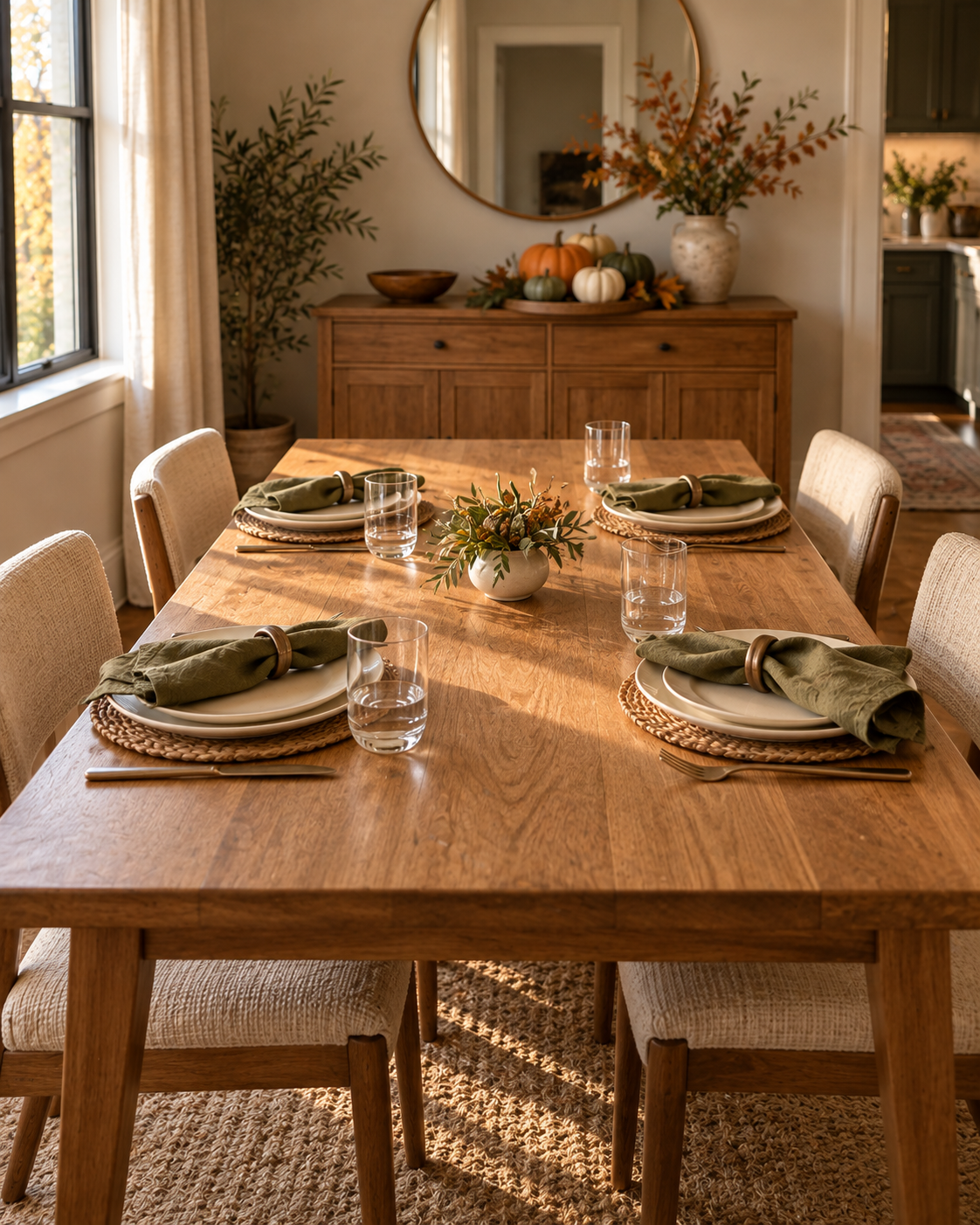
Move the largest seasonal display to a sideboard and let the table carry a smaller version of the same colors. A low bowl at the center may be enough. Keep oversized chargers, multiple decorative layers, and extra glasses only if they fit comfortably and have a purpose.
If dishes will be passed around, reserve a useful stretch of surface for setting them down. Test the arrangement with the largest serving bowl. A table can feel abundant because the meal is generous, without needing every inch covered in decor.
Consider the table after dark
Check the room with the lighting you will use during the meal. Overhead light may be enough; a nearby lamp can soften the background. If you include candles, use them according to their instructions and household needs, keeping them away from anything that could contact them. An appropriate battery-operated option may suit the arrangement better.
Avoid highly scented decorations beside food. Consider guests’ preferences and sensitivities when choosing flowers or other materials. Simple visual details are often the easiest choice for a dining table.
Three combinations to try with everyday pieces
Warm and simple: ivory dishes, a natural linen runner, rust napkins, and a shallow bowl of small decorative pumpkins. Keep the bowl low and let the wood table remain visible.
Quiet green: cream dishes, olive napkins, clear glasses, and a compact arrangement in a plain ceramic vessel. Repeat the green elsewhere in the room if you already have a suitable piece.
Blue with autumn color: blue-and-white plates, a plain cream cloth, and a restrained amber or rust accent. Let the plate pattern do most of the work rather than adding another busy print.
Finish before guests arrive
Set the table ahead of time, then check every seat, glass, and serving space once more. Keep a clear landing spot for the meal and a convenient place to move the centerpiece if needed.
When deciding whether to add one more decoration, ask what it contributes. A useful surface, a clear view across the table, and a comfortable place for every guest are the details that make the setting welcoming.